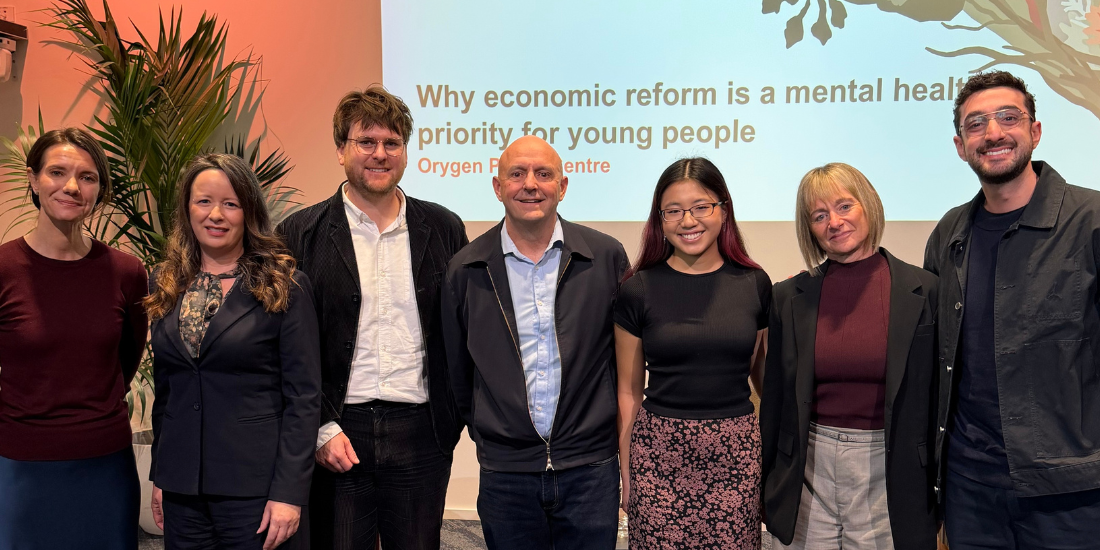
 Left to right: the Hon. Rose Jackson, A/Prof. Jo-An Occhipinti, Thomas Walker, Dr Richard Denniss, Tara Tjahjadi, Prof. Jo Robinson, Sam Koslowski
With the youth mental health crisis escalating, how can we better understand and change how the economic system in Australia shapes and impacts young people’s lives and health?
That was the central question discussed and debated at the first in a series of events held by the recently relaunched Orygen Policy Centre, which brought together experts from across sectors in Sydney this week to explore the intersection of mental health and economics, and the steps we can take to make meaningful and sustainable change.
VIDEO: Press PLAY to watch the full conversation on demand
Orygen Policy Centre event at Greenhouse Tech in Sydney.
The panel discussion, featuring Dr Richard Denniss (co-CEO of the Australia Institute), A/Prof. Jo-An Occhipinti (co-director of the Mental Wealth Initiative at the University of Sydney), Tara Tjahjadi (lived experience researcher at the Brain and Mind Centre) and Thomas Walker (CEO of Think Forward), was facilitated by Sam Koslowski (co-founder of The Daily Aus) and explored the economic pressures facing young people today.
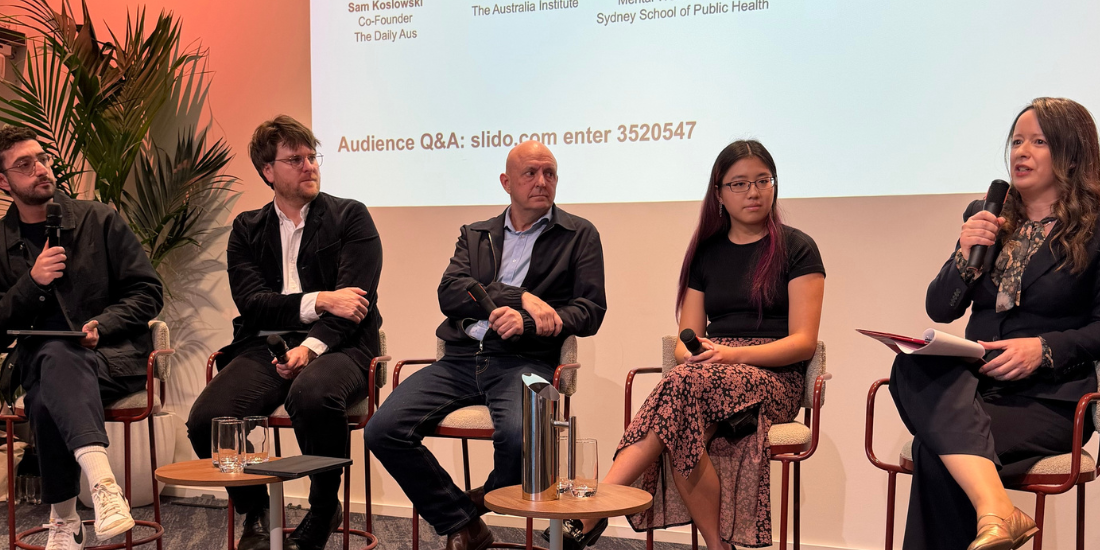 A/Prof. Jo-An Occhipinti (far right) highlighted recent work of the Mental Wealth Initiative, examining almost five decades of Australian labour-market data.
Panellists spoke in depth about the impact of economic policy on young people’s lives – with many struggling under burdens of debt and financial strain that limit their ability to pursue education and employment, connect with community or access support when they need it.
With these economic conditions inextricably linked to hope for the future and overall mental health, the panellists agreed that tackling the youth mental health crisis would take much more than simply bolstering health services – it would take structural and systemic economic reform.
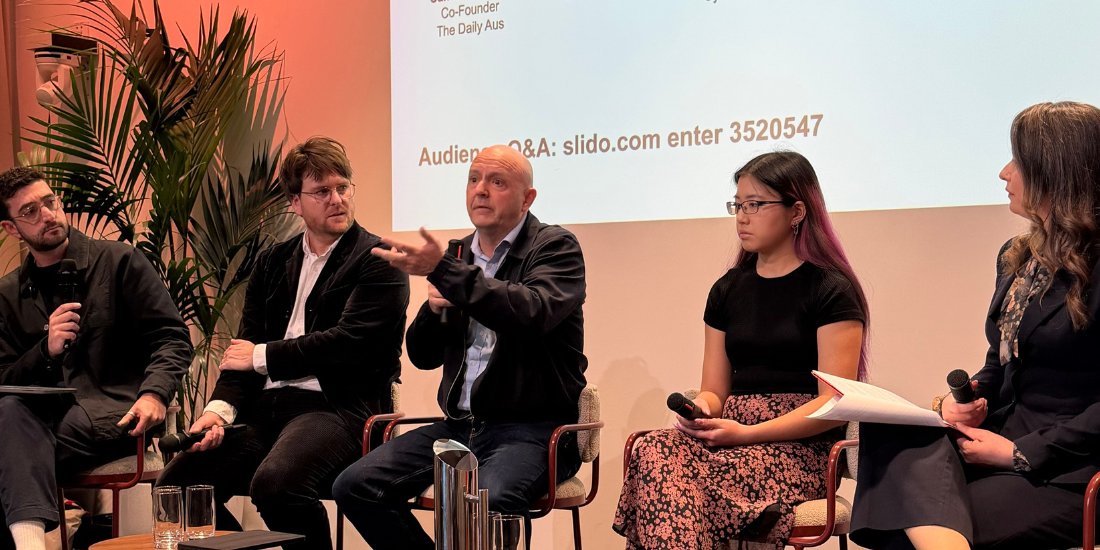 Dr Richard Denniss (middle) said economics had done a good job of lowering people's expectations.
Scientific and Research Director of the Orygen Policy Centre, Professor Jo Robinson, said that if we don’t act now to change things for young people, the consequences will be felt for generations.
“Economic policy isn't separate from mental health policy – increasingly it is mental health policy for many young people,” Prof. Robinson said.
“Whether that be about employment or underemployment, cost of living, housing affordability, or the economic barriers to accessing healthcare, these pressures are impacting young people’s health and wellbeing.
“There could not be a more critical time to be having this discussion.”
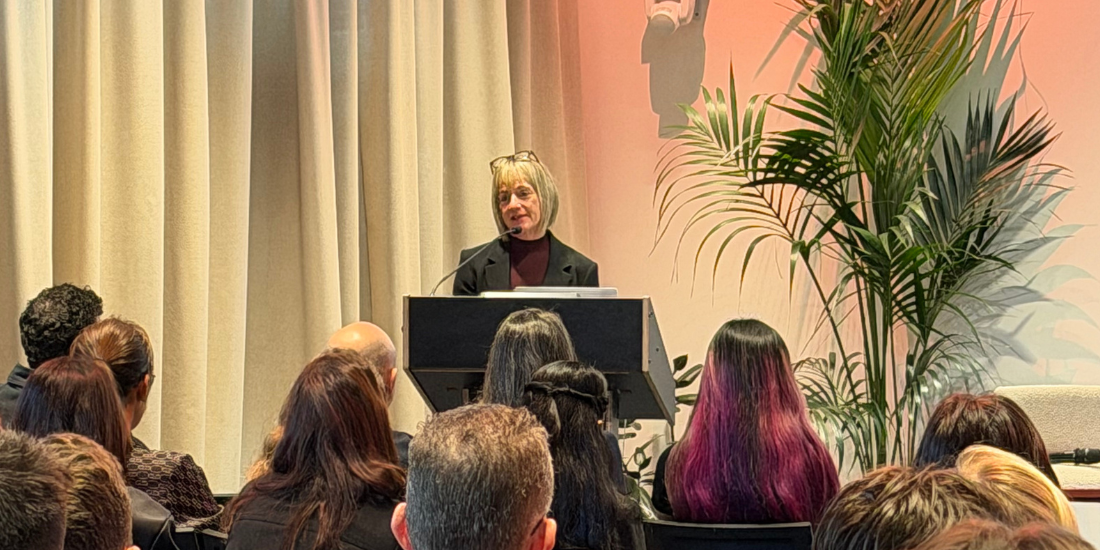 Prof. Jo Robinson said translating evidence into real-world change for young people and their families was central to Orygen's mission.
The Hon. Rose Jackson, NSW Minister for Mental Health and Minister for Youth closed out the event, reflecting on the intersection of challenges facing young people, which mirror her portfolios of mental health, youth and housing.
The Minister acknowledged that while so much of what’s important to us – and supports our mental health – can’t be physically purchased, it’s incredibly hard to live a good life and contribute to society if financial strain is holding you back.
Despite the challenges, the panel offered practical policy solutions – some simple, some more complex – to make real structural change. The event closed with a sense of hope and optimism that the solutions exist, and that youth mental health advocates, politicians and economists will all keep fighting for reform.
As lived experience researcher Tara Tjahjadi said in closing, one thing that can give us hope is that despite the challenges they face, young people keep showing up – and keep advocating for the change that’s needed to support their aspirations for the future.