The 79th World Health Assembly - May 2026
The 79th World Health Assembly - May 2026
Orygen was pleased to be an active participant at the 79th World Health Assembly, co-hosting three side events focused on low-intensity models of care, social media and suicide prevention and a way forward in a digitally connected world.
.png.aspx "Group-at-WHA_900-(1).png") Left to right: Prof. Patrick McGorry, Prof. Jo Robinson, Craig Hodges, Vivienne Browne, Nataya Branjerdporn.
Left to right: Prof. Patrick McGorry, Prof. Jo Robinson, Craig Hodges, Vivienne Browne, Nataya Branjerdporn.
This year saw mental health-related events in both the official program and as side events. A key focus of this year’s Assembly was the changing shape of the global health architecture. The global health architecture is the complex web of organisations, rules and funding mechanisms that govern and coordinate responses to worldwide health challenges.
As young people’s mental health continues to decline globally, Orygen leaders have been working alongside leaders from countries around the world to explore the drivers of mental ill-health, understand gaps in research and systems and find solutions at this year’s World Health Assembly in Geneva.
The annual Assembly is the main decision-making body of the World Health Organization (WHO) and brings together member states to agree on policies and priorities to drive better health and wellbeing outcomes globally.
Orygen Executive Director, Professor Patrick McGorry AO, said that now more than ever a global effort was needed to change the trajectory of youth mental health.
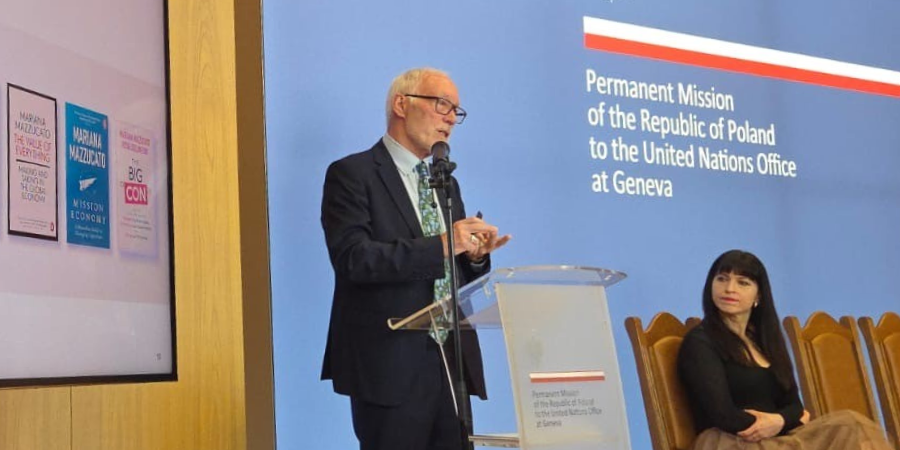 Prof. Patrick McGorry (left) presents at the Polish Embassy.
“As the WHO Director-General said of health worldwide, we have reached a fork in the road and that is particularly true when it comes to youth mental health – either we tackle this now or we will see increasingly negative outcomes for future generations around the world .
Young people are growing up in a world shaped by huge external forces – neoliberalism, global conflict, climate change – and at the same time, the systems set up to support them are at breaking point. We have the solutions, and Orygen is working globally to drive awareness, innovation and system reform.
However, we need urgent action at all levels of government to address the structural forces driving distress and build new systems of youth mental health care to enable young people to recover from mental ill-health and serious mental illness.”
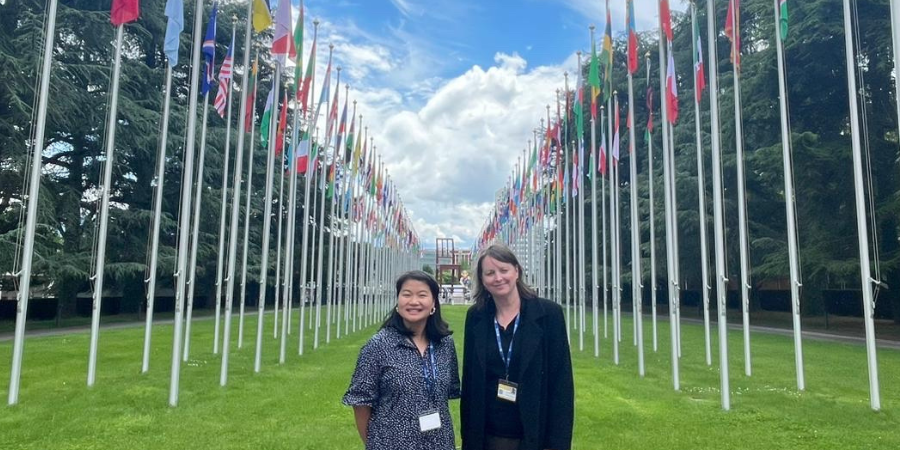 Orygen Global's Nataya Branjerdporn (left) and Orygen Director of Policy and Engagement, Vivienne Browne.
In a landmark moment for Australian youth mental health research, Orygen's leadership in the field was acknowledged at the Assembly with the announcement of the organisation as a WHO Collaborating Centre for Young People’s Mental Health, recognising Orygen’s leading role globally and its capacity to drive innovation, knowledge exchange and reform into the future.
The three side events co-hosted by Orygen brought together policy makers, WHO leadership, civil society, young people and global partners to advance action on youth mental health, suicide prevention and digital wellbeing.
At the Building the Mental Wealth of Young People event, co-hosted by headspace Denmark, Orygen representatives discussed innovative approaches to the mental health workforce, including bringing lay counsellors into services to increase access to early support and bolster the availability of youth mental health support across the spectrum of needs. The event also saw the launch of an Implementation Guidance resource to support this approach.
The Protecting the Mental Health of Children and Youth in the Digital World addressed the growing mental health impacts of digital technologies on young people. Hosted by the Polish Mission; the Polish, Australian, Cypriot and Indonesian Governments partnered to deliver the event which included addresses from the Australian Government’s Secretary for Health, Disability and Ageing, Mr Blair Comley and Professor Patrick McGorry.
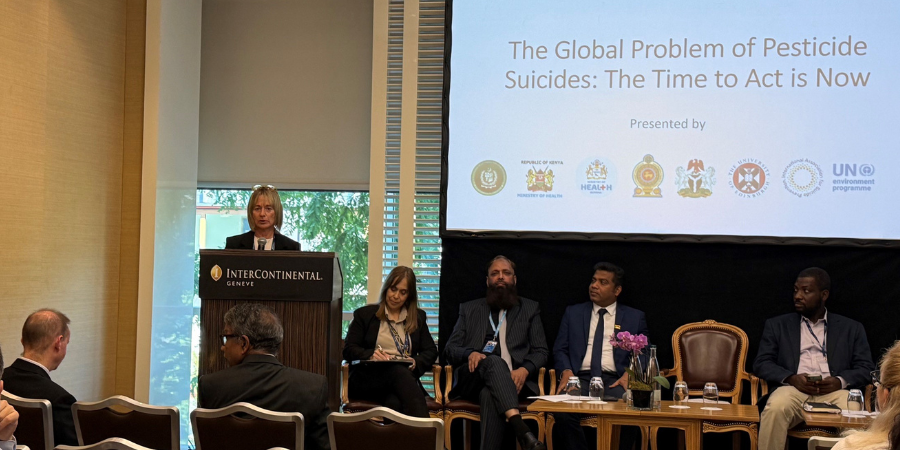 Prof. Jo Robinson presents at a suicide prevention event at the World Health Assembly.
The Artificial Intelligence, Social Media and Suicide Prevention event addressed the governance, safety and ethical considerations at the intersection of digital technology and suicide prevention, particularly regarding the increasing prevalence of Artificial Intelligence. This event, jointly hosted by the International Association of Suicide Prevention, Orygen, Safe Online and Crisis Text Line, included Professor Jo Robinson on the sector panel and Nataya Branjerdporn facilitating a youth panel. The event was one of three focused on suicide prevention at the Assembly, the first time this vital topic has been so high on its agenda. The conversation was timely following the release of Orygen's Digital Environments and Youth Mental Health report, commissioned by the WHO, which for the first time, lays out an international research agenda to better understand the relationship between digital environments (i.e. social media, gaming and generative AI) and youth mental health.
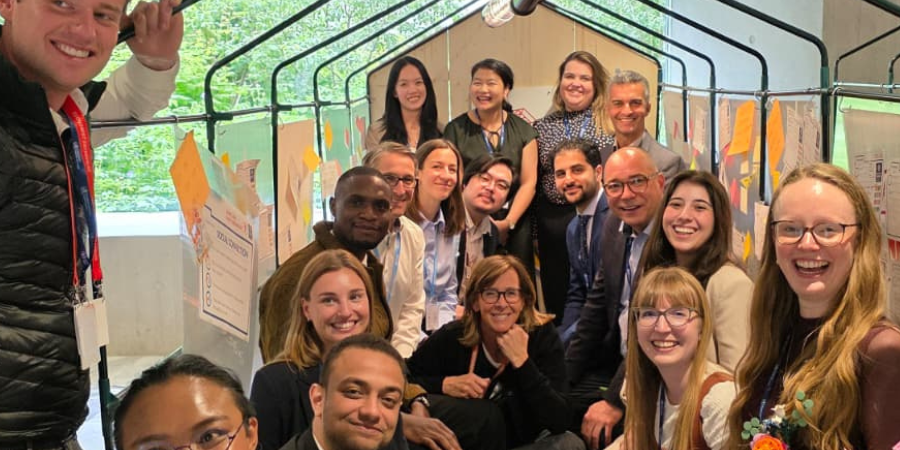 Participants in the Youth Solutions Greenhouse at the World Health Assembly.
Orygen was also involved in the WHO Youth Council and the first Youth Solutions Greenhouse at this year’s Assembly. The Greenhouse initiative created a space within the WHO for dialogue, collaboration and engagement throughout the World Health Assembly week to strengthen ideas, social connection and youth participation. The initiative was led by the WHO Youth Council's health education and literacy working group, which is co-chaired by Nataya Branjerdporn.